Wholesale LiFePO4 Energy Storage Solutions
Engineered for seamless integration with off-grid, hybrid, and industrial solar installations in Tijuana, Tecate, and Rosarito.




Industrial Strategic Positioning: LiFePO4 Sourcing in Tijuana & Baja California
Tijuana has rapidly solidified its position as North America’s preeminent nearshoring manufacturing engine. Situated directly on the US-Mexico border adjacent to San Diego, California, Tijuana’s industrial corridors—including Otay Mesa, Parque Industrial El Florido, Ciudad Industrial, and Pacifico—host over 600 export maquiladoras spanning aerospace, medical device assembly, electronics, and automotive manufacturing. However, this explosive industrial expansion has placed immense operational strain on the regional electrical grid operated by the National Energy Control Center (CENACE) and the Comisión Federal de Electricidad (CFE).
Unlike mainland Mexico, the Baja California Interconnected System (Sistema Interconectado Baja California - BCA) operates as an isolated electrical island, disconnected from Mexico's National Interconnected Grid (SIN). During peak summer months, high ambient temperatures exceeding 40°C combine with massive HVAC and manufacturing loads to create severe grid congestion, voltage sag, and mandatory CFE load-shedding events. For B2B solar EPC contractors, commercial project developers, and electrical equipment wholesalers operating in Tijuana, sourcing reliable, high-density Lithium Iron Phosphate (LiFePO4) solar battery bank systems is no longer merely an option for environmental sustainability—it is a mission-critical infrastructure mandate to guarantee operational continuity and hedge against surging tariff structures under CFE’s GDMTH (Gran Demanda Media Tensión Horaria) schedule.
Why LiFePO4 Chemistry is Essential for Tijuana's Operating Environment
Selecting the correct electrochemical storage medium is vital when designing energy systems exposed to the semi-arid, coastal, and high-temperature microclimates of Northwest Mexico. Traditional flooded lead-acid, AGM, and ternary lithium (NMC) chemistries exhibit severe performance degradation, thermal runaway vulnerabilities, and high maintenance costs under Tijuana’s specific environmental constraints.
Thermal Runaway Immunity
LiFePO4 (Lithium Iron Phosphate) features an intrinsically stable olivine crystal structure with strong P-O covalent bonds. Unlike NMC cells, LFP does not release oxygen upon thermal decomposition, staying stable up to 550°C—critical for unconditioned outdoor enclosures in Tijuana's summer heat.
7,000+ Deep Cycle Lifespan
Utilizing Automotive Grade-A prismatic cells, our battery systems deliver over 7,000 cycles at 80% Depth of Discharge (DoD). This translates to an operational lifespan exceeding 15 years in daily solar-plus-storage cycling service, dramatically lowering LCOE for commercial buyers.
Marine & Dust Protection
With IP65 rated wall-mounted and server-rack enclosures featuring anti-corrosion powder coatings, our batteries resist salt-fog oxidation in coastal districts like Playas de Tijuana while preventing fine dust ingress in dry industrial inland sectors.
Technical Parameter Comparison: LiFePO4 vs. Legacy Chemistries
The technical matrix below outlines why commercial wholesalers and solar integrators across Baja California are systematically retrofitting outdated lead-acid banks with our smart BMS-integrated LiFePO4 rack and wall-mounted systems:
| Technical Feature / Parameter | Tier-1 LiFePO4 Battery (Our Factory) | Legacy AGM / Gel Lead-Acid | Ternary Lithium (NMC) |
|---|---|---|---|
| Cycle Life (80% DoD, 25°C) | 6,000 - 7,000+ Cycles | 500 - 1,200 Cycles | 1,500 - 2,500 Cycles |
| Round-Trip Efficiency (RTE) | 95.5% - 98% | 75% - 82% | 92% - 94% |
| Thermal Decomposition Limit | 550°C (High Safety) | 120°C (Gas Emission Risk) | 210°C (Thermal Runaway Risk) |
| Communication Protocols | CANbus 2.0B / RS485 / RS232 / WiFi | None (Passive Voltage) | CANbus / RS485 |
| Parallel Scaling Capability | Up to 15 Units (153.6kWh+) | Limited (Voltage Imbalance) | Up to 8 Units |
| Inverter Compatibility | Victron, SMA, Deye, Growatt, MUST, Sol-Ark | Universal (Basic) | Brand Specific |
| Warranty & Service Life | 10-Year Warranty / 15-Year Life | 1 - 2 Year Warranty | 3 - 5 Year Warranty |
Localized Use-Cases: Solving Tijuana's Energy Security Challenges
Our factory customized LiFePO4 batteries are specifically tailormade to service the diverse commercial, industrial, and residential applications across Tijuana and the wider Baja California Peninsula:
1. Industrial Maquiladora Peak-Shaving (GDMTH Tariff)
Industrial plants in Otay Mesa and El Florido operating under CFE GDMTH tariffs face exorbitant demand charges during "Punta" (Peak) hourly slots (typically 18:00 to 22:00 in summer).
- Mechanism: High-capacity 48V/51.2V stacked or tower LiFePO4 banks discharge rapidly during peak billing windows, clamping total facility kW demand.
- ROI Impact: Reduces monthly CFE capacity charges by up to 35%, achieving full capital payback in under 2.5 years for commercial facilities.
- Integration: Seamless parallel pairing via CANbus to 100kW+ industrial hybrid inverters.
2. Cross-Border Residential & Executive Microgrids
Executive residential communities in Agua Caliente, Cacho, and Playas de Tijuana suffer frequent localized transformer failures during summer grid overloads.
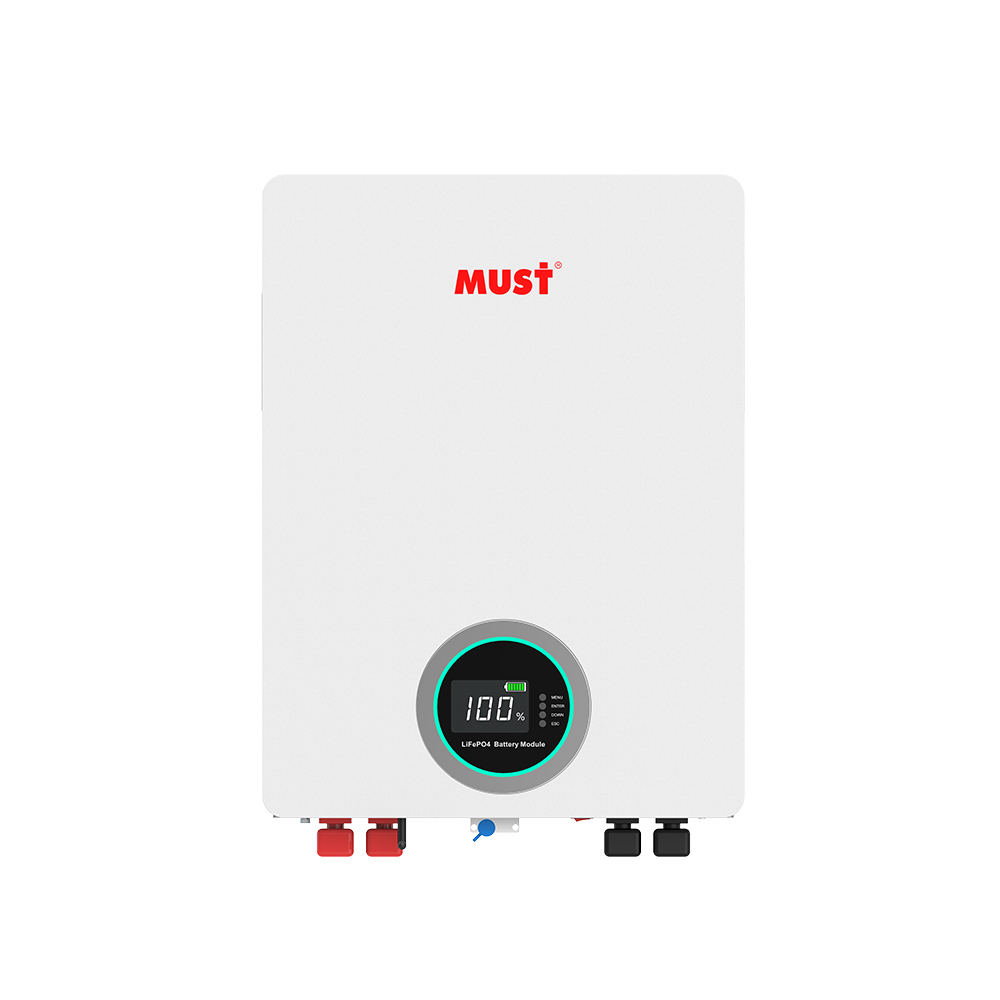
- Mechanism: Wall-mounted HBP19 and LP2800 5kWh - 10kWh LiFePO4 packs combined with hybrid inverters switch to zero-ms UPS mode during grid blackouts.
- Performance: Quiet, zero-emission power supporting high-surge loads like air conditioning, refrigeration, and automated gate security.
- User Interface: Built-in WiFi/RS485 modules enable remote monitoring via iOS/Android apps for cross-border homeowners residing in San Diego or Tijuana.
3. Logistics Hubs & Cold Storage Continuity
Tijuana’s position as a bi-national freight gateway requires uninterrupted cold-chain operation for fresh produce and medical export storage near the border port.
- Mechanism: Modular 48V 250Ah rack-mounted battery systems support critical refrigeration pumps and automated inventory control systems.
- Scalability: Parallel scalability up to 153.6kWh ensures multi-day power backup without relying on noisy diesel generators subject to environmental fines.
4. Distributed Generation (GD) Commercial Solar Integrations
Under Mexican energy legislation, Distributed Generation systems under 500kW avoid complex CRE generation licensing, making solar-plus-storage highly lucrative.
- Mechanism: Our wholesale LiFePO4 batteries absorb excess mid-day solar generation that exceeds net-metering caps, storing clean power for evening distribution.
- Grid Code Compliance: Smart BMS controls ensure compliant voltage stabilization matching CFE interconnect requirements.
Localized Development Trends: The Baja California Energy Market Horizon
Analyzing market dynamics across Tijuana, Ensenada, and Mexicali reveals three primary macroeconomic catalysts accelerating the shift toward industrial-grade LiFePO4 storage:
1. Nearshoring Infrastructure Bottlenecks: As foreign direct investment (FDI) surges into Baja California from Asian and North American manufacturers seeking US MCA compliance, industrial park developers are encountering CFE grid connection delays of 12 to 24 months. Battery Energy Storage Systems (BESS) allow new factory floors to operate temporarily under off-grid solar-generator microgrid topologies, accelerating production start dates.
2. Transition from Net-Metering to Net-Billing Friction: Regulatory shifts under Mexico’s evolving energy framework are reducing the financial compensation rates paid by CFE for unconsumed solar energy fed back into the grid. Consequently, self-consumption optimization—charging local 48V LiFePO4 batteries during peak solar radiation hours and discharging during facility operation—has become the standard financial model for maximum solar ROI.
3. Near-Border Cross-Dock Sourcing Synergy: Tijuana electrical wholesalers and solar installers increasingly demand OEM partners capable of managing direct logistics through Otay Mesa or San Ysidro ports of entry, offering duty-optimized customs documentation, NOM (Normas Oficiales Mexicanas) electrical safety alignment, and direct factory technical warranties.
Direct-from-Manufacturer Advantage: Engineering Capability & Quality Control
Sourcing high-voltage and low-voltage lithium storage systems directly from an established primary manufacturer guarantees product authenticity, long-term technical support, and uncompromised safety compliance.
State-of-the-Art Factory Infrastructure
Spanning 31,056 m² with 1,109 skilled workers, our automated production facility houses 12 SMT lines, advanced laser cell welding, and computerized multi-stage aging bays capable of producing over 600,000 power electronics and battery units per year.
TÜV Rheinland & ISO Certification
Our operational management systems are rigorously certified to ISO 9001, ISO 14001, and ISO 45001. Our plant facilities undergo regular on-site verification by TÜV Rheinland, offering Tijuana importers absolute transparency and compliance audit readiness.
Proprietary BMS Firmware Customization
Our in-house R&D team of 80+ engineers programs proprietary Battery Management System (BMS) software supporting over 20 major inverter communication protocols (including CANbus 2.0B, RS485, and RS232) for seamless multi-brand inverter matching.
Frequently Asked Questions by Tijuana Wholesalers & Installers
Addressing critical procurement, import logistics, regulatory compliance, and engineering queries for B2B buyers in Mexico.
1. How do you handle shipping, customs clearance, and logistics to Tijuana, Baja California?
2. Are your LiFePO4 batteries compatible with mainstream hybrid inverters used in Mexico?
3. Can your battery banks be scaled for high-voltage commercial applications in industrial parks?
4. What warranty coverage and local technical support do you offer for Baja California buyers?
5. Do your products comply with NOM (Normas Oficiales Mexicanas) safety requirements?
6. What is the Minimum Order Quantity (MOQ) and production lead time for OEM/ODM orders?
Partner with a Direct Tier-1 Solar Battery Manufacturer
Expand your wholesale catalog in Tijuana & Baja California with high-margin, ultra-reliable LiFePO4 battery storage systems engineered for North America's industrial growth.
Inquire Now