Commercial & Residential Product Showcase



Industrial Manufacturing & Quality Metrics
Technical Evolution of Solar Battery Chargers & Energy Storage Systems (ESS)
The global solar energy ecosystem is experiencing a structural transition from basic standalone power conversion toward complex, software-defined energy storage architectures. As grid instabilities increase and Time-of-Use (TOU) electricity pricing schemes proliferate globally, commercial buyers, regional wholesalers, and EPC installers require robust solar battery chargers and integrated energy storage systems designed for high-surge efficiency, operational durability, and seamless grid-interactivity.
Modern industrial solar battery charging goes far beyond delivering bulk current to lead-acid batteries. Today’s premier original equipment manufacturers (OEMs) engineer high-frequency and low-frequency hybrid chargers utilizing Lithium Iron Phosphate (LiFePO4 / LFP) chemistry coupled with ultra-fast Maximum Power Point Tracking (MPPT) algorithms. Understanding the engineering core of these platforms is essential for wholesale buyers seeking to optimize inventory turnover and provide multi-decade reliable field operations.
High-Yield Dual-Stage MPPT
Advanced tracking algorithms achieve >99.5% efficiency, converting high-voltage array DC power directly into optimized multi-stage battery charging profiles with minimal thermal loss.
Solid-State Smart BMS Integration
Integrated microprocessors continuously balance 16S/32S cell configurations, monitoring thermal gradients, over-voltage, state-of-charge (SoC), and depth-of-discharge (DoD).
Multi-Protocol Telemetry
Dual CAN-bus and RS485/RS232 communications interface directly with leading global inverter brands, enabling real-time telemetry and OTA firmware updates.
LFP Chemistry vs. Legacy Lead-Acid: The Economic Imperative
For B2B buyers and energy project managers, the levelized cost of storage (LCOS) has firmly positioned LiFePO4 as the dominant battery chemistry over AGM, Gel, and flooded lead-acid solutions. While lead-acid options offer a lower initial capital expenditure (CAPEX), their structural limitations—specifically shallow depth of discharge (50% max recommended), high thermal degradation, and a limited life cycle of 500 to 1,200 cycles—create substantial long-term operational costs.
In contrast, Tier-1 manufacturing practices utilize automotive-grade prismatic LiFePO4 cells. These systems deliver 7,000+ continuous cycles at 80% Depth of Discharge, operating reliably across wide ambient temperature spans (-20°C to +60°C). When paired with intelligent MPPT battery chargers, LFP systems mitigate energy degradation and provide an operational lifespan exceeding 10 to 15 years, vastly outperforming legacy installations in total return on investment (ROI).
Strategic Wholesale Procurement Trends (2025–2030)
Wholesale buyers and solar distributors navigating the evolving energy sector must align their sourcing strategies with key technology trends shaping commercial and residential solar markets over the coming decade:
1. Migration Toward High-Voltage (HV) Stackable Architecture
While 48V low-voltage (LV) systems remain the baseline standard for off-grid power generation and small-scale residential storage, large-scale residential and commercial systems are rapidly migrating toward High-Voltage (300V–800V DC) battery architectures. High-voltage charging lowers operational current, drastically reducing copper cable cross-sections, thermal loss, and balance-of-system (BOS) costs while increasing overall round-trip system efficiency (RTE) above 95%.
2. Solid State BMS & Artificial Intelligence (AI) Energy Arbitrage
Hardware charging logic is increasingly combined with AI-driven energy management software (EMS). Next-generation solar battery chargers leverage Wi-Fi/4G connectivity to process local weather telemetry and dynamic grid tariffs, automatically determining whether to charge battery banks directly from PV arrays, store power during low-cost off-peak grid hours, or feed back into commercial microgrids during peak pricing periods.
3. All-In-One (AIO) Modular Integration
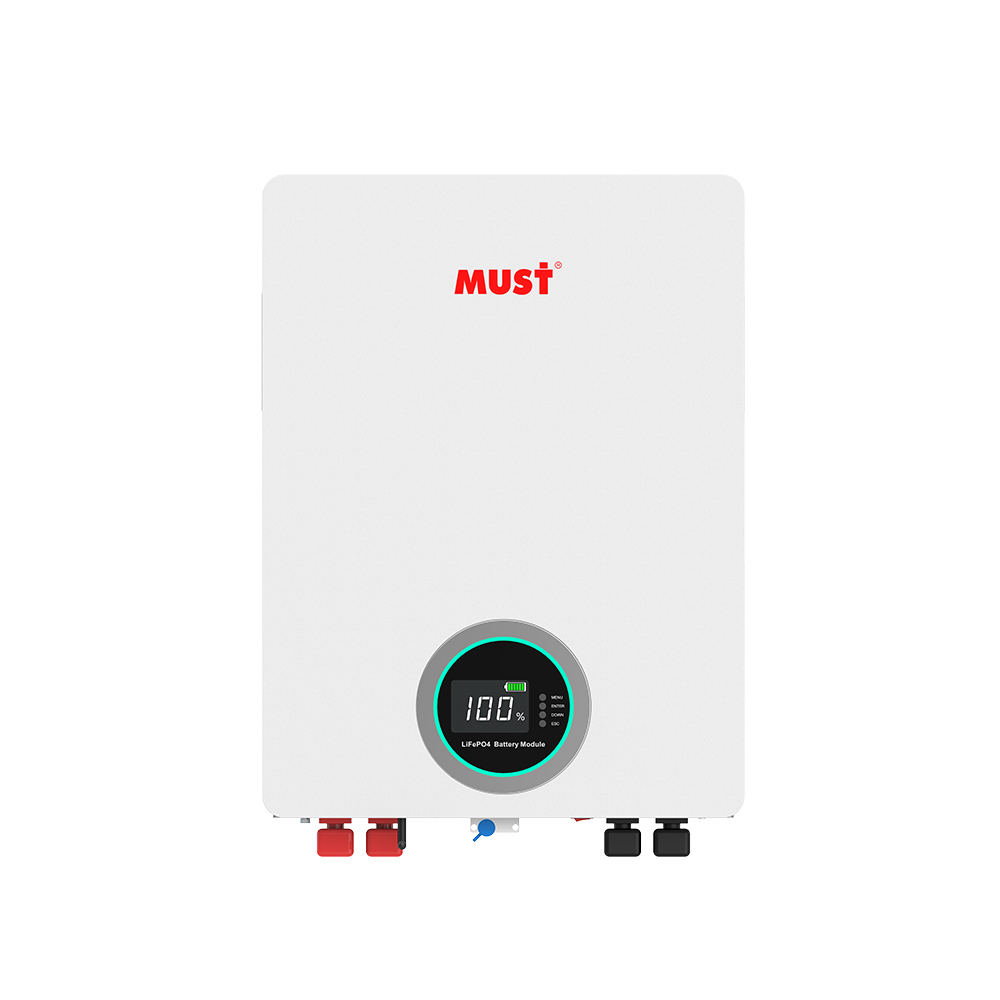
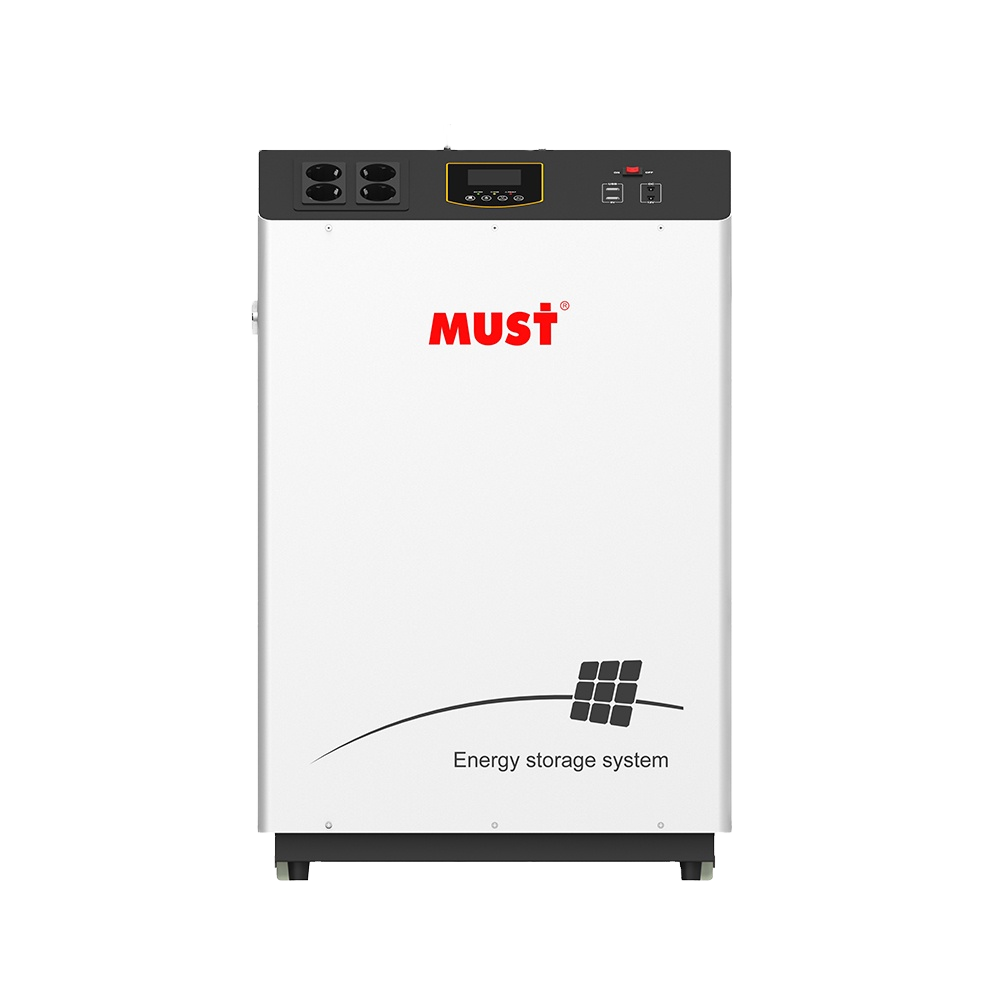
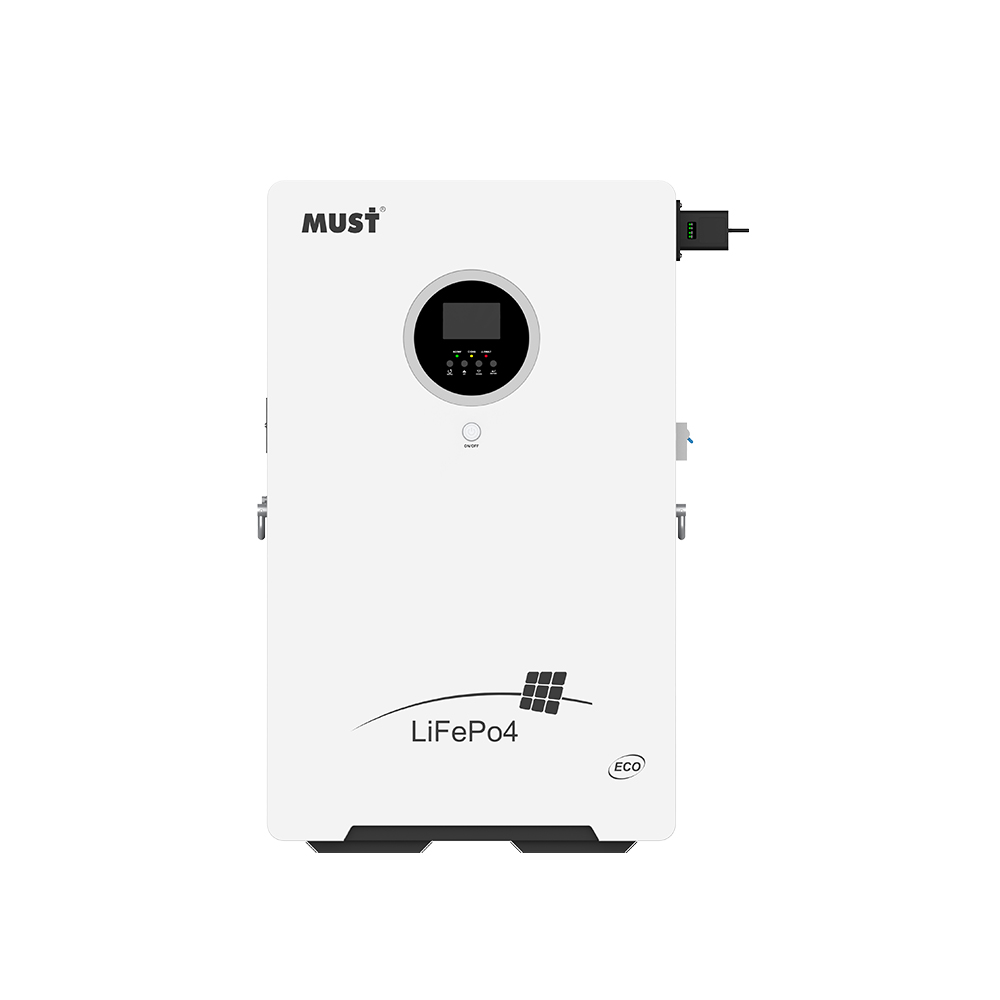
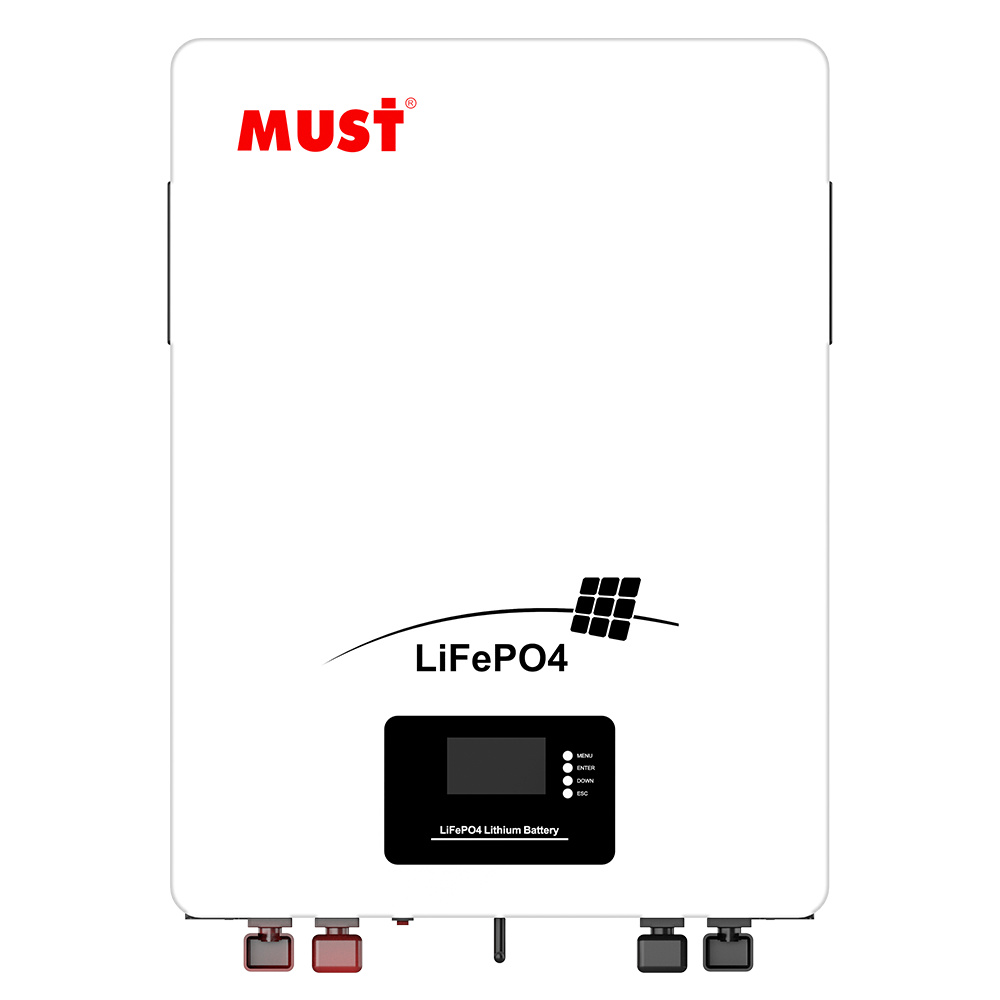
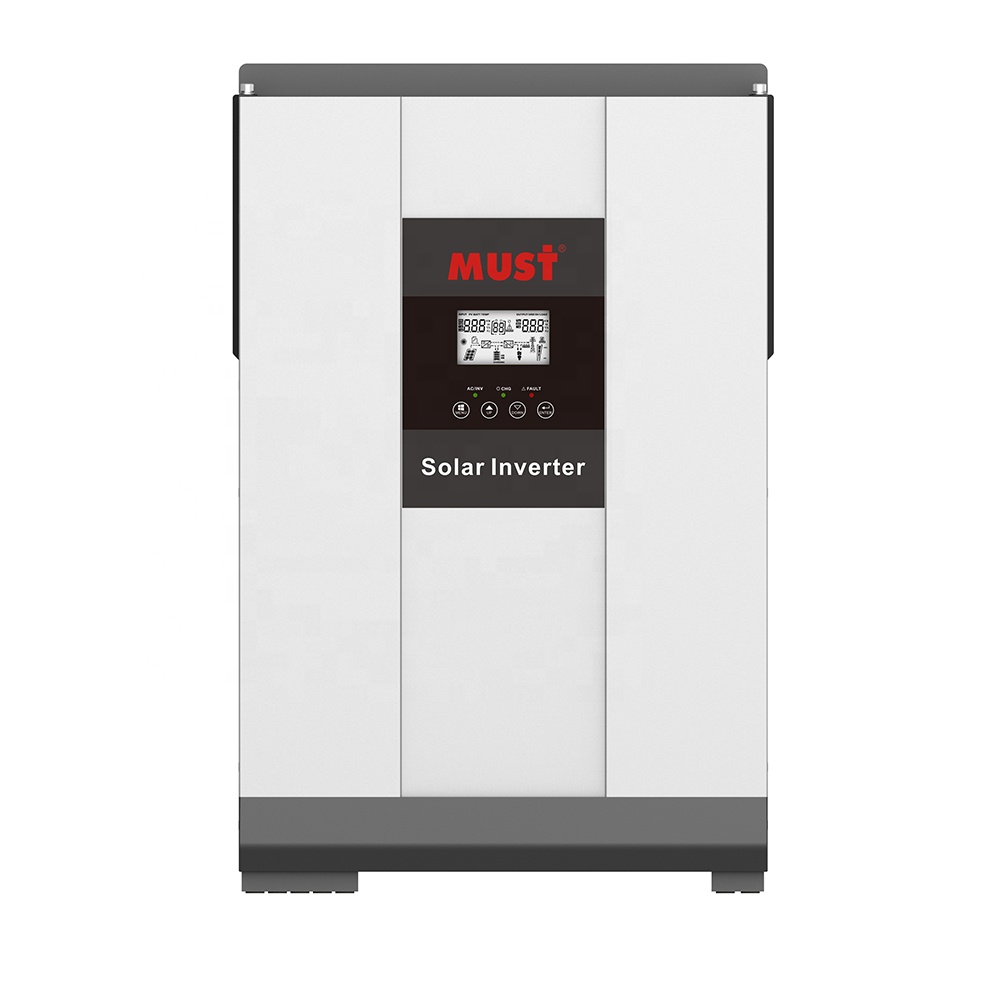
Distribution networks are seeing accelerating demand for pre-configured, modular All-In-One systems (such as the MUST HBP19 Series). By integrating the hybrid pure sine wave inverter, MPPT solar controller, LFP battery pack, and AC/DC distribution breakers into a unified IP65 powerwall enclosure, manufacturers reduce installation time for EPC contractors by up to 70% while completely eliminating wiring errors in the field.
Factory Manufacturing Competence & Quality Management
Sourcing solar equipment from verified custom manufacturers ensures consistent build quality, regulatory compliance, and complete engineering transparency. Operating across a 31,056 m² high-tech manufacturing base equipped with automated SMT production lines, specialized cell-matching equipment, and comprehensive environmental testing chambers, CJH Energy / MUST Factory delivers enterprise-grade supply capabilities:
- Quality System Management: Certified under ISO 9001:2015 (Quality), ISO 14001:2015 (Environmental), and ISO 45001:2018 (Occupational Health & Safety).
- On-Site TÜV Rheinland Verification: Rigorous third-party auditing validating real-world plant capacity, worker safety standards, and traceability systems.
- Engineering & Customization (OEM/ODM): Supported by an in-house R&D division of over 80 senior engineers holding national invention patents for power conversion efficiency and BMS balancing algorithms.
- Global Logistics & Regional Support Hubs: Fully equipped overseas logistics and technical centers established in Warsaw (Poland - European Hub), South Africa, Dubai, and Egypt to provide rapid local stock distribution and immediate warranty processing.
Wholesale OEM & ODM Customization Scope
We offer full industrial customization for global brand owners and distributors. Customization parameters include private-label silkscreening, custom chassis powder coating, custom LCD display UI firmware, pre-configured CAN-bus inverter communication profiles, specialized AC voltage output ranges (110V/120V/220V/230V/380V), and tailored lithium cell assembly configurations.
Solar Battery Procurement & Technical FAQ
- 12V Systems: Recommended for low-power applications under 1,000W, including small cabins, mobile RVs, telecom remote stations, and portable power kits.
- 24V Systems: Optimized for mid-tier loads between 1,000W and 3,000W, common in small residential off-grid setups.
- 48V Systems: The standard recommendation for residential and commercial loads exceeding 3,000W. Higher battery voltage lowers DC operating current, reducing thermal resistance, allowing thinner copper cabling, and maximizing overall round-trip system efficiency.
Partner with a World-Leading Solar Storage Manufacturer
Consult with our senior technical engineers to receive customized product specs, factory wholesale price sheets, OEM compliance documentation, or to schedule an on-site factory audit.
Send an Inquiry