Featured Commercial & Residential Energy Products
Precision-engineered inverters and high-density LiFePO4 battery systems. Compliant with international grid codes, certified with ISO 9001, CE, and TÜV Rheinland verification.
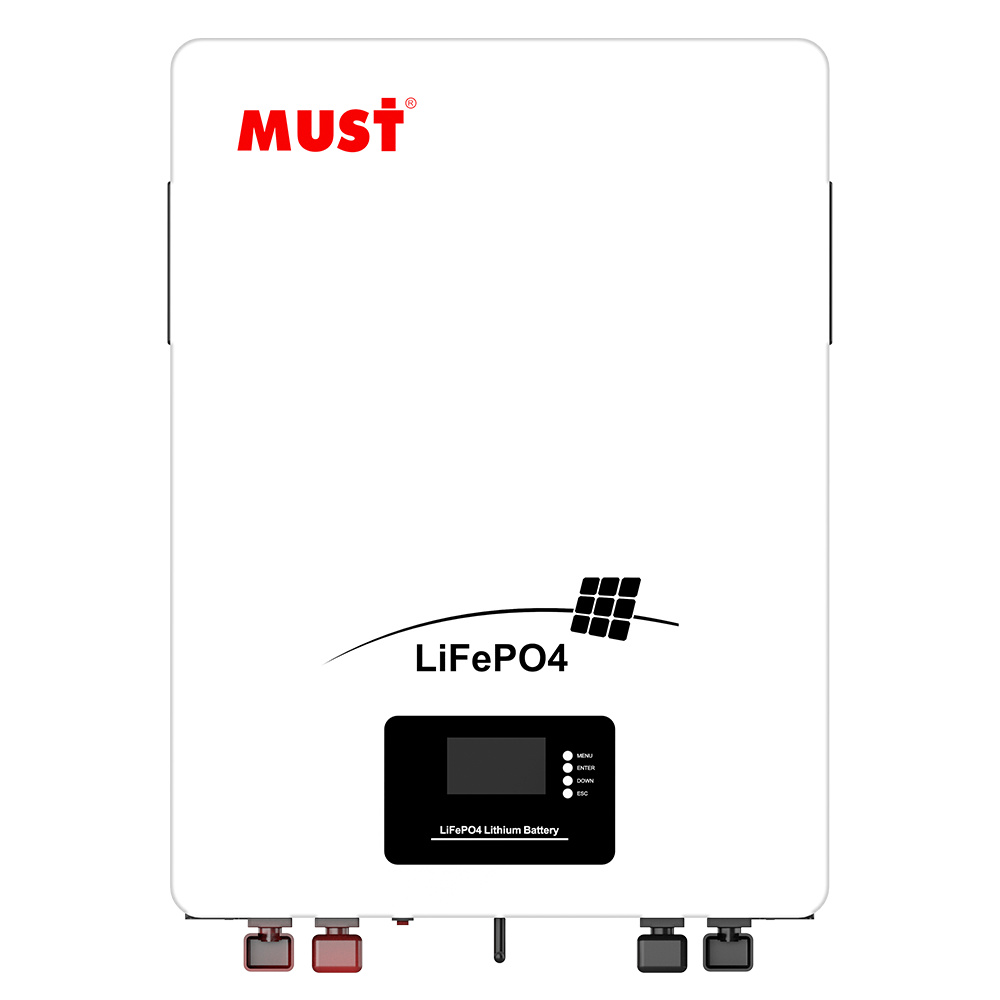
IP65 48V 100Ah 10KWh LiFePO4 Powerwall Energy Storage
Heavy-duty outdoor IP65 waterproof design with dual CAN/RS485 communication protocols, ultra-long 6000+ cycle life, ideal for residential off-grid and grid-tied systems.
Get a Quote
MUST EU Stock 100Ah/200Ah Solar LiFePO4 Battery 48V
Fast-delivery European local stock. High-grade 48V solar lithium battery integrated with intelligent BMS, wide inverter protocol matching, and active balancing technology.
Get a Quote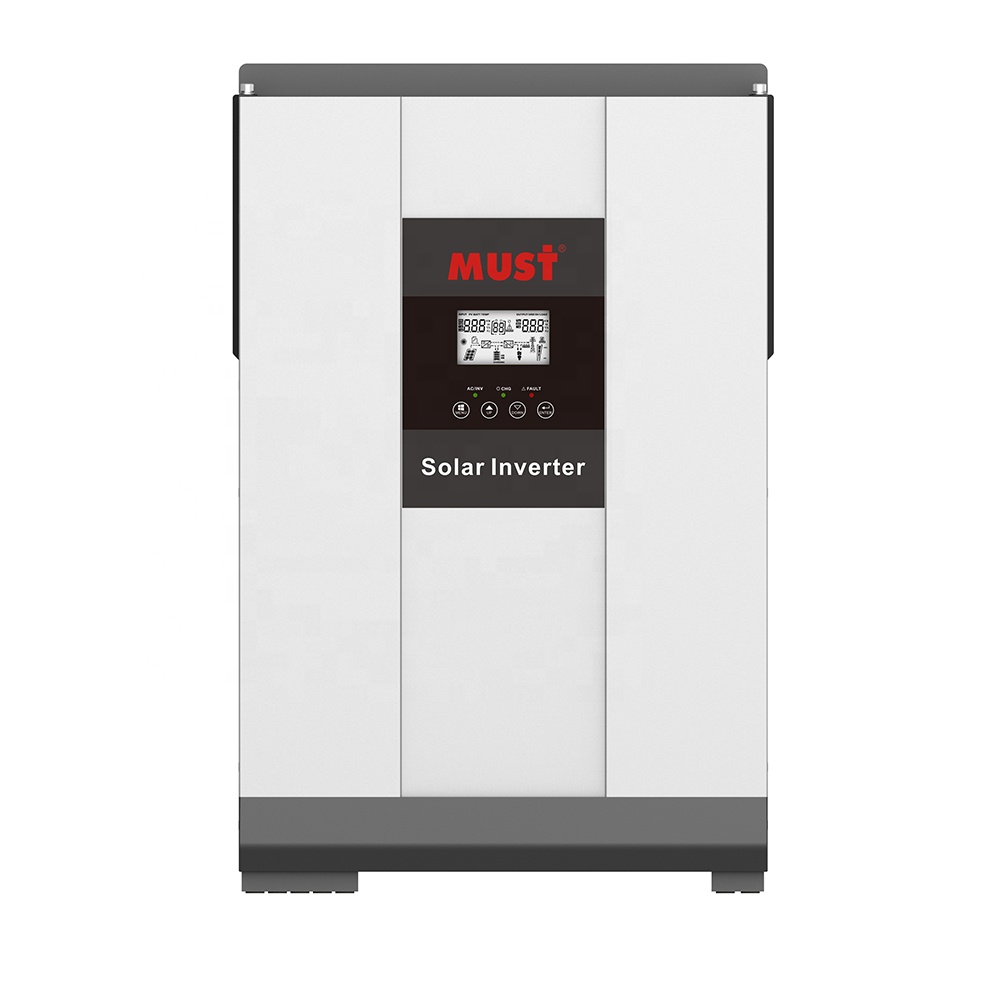
MUST Hybrid On-Grid Solar Inverter 3KW / 4KW / 5KW
High-efficiency hybrid grid-tie power inverter featuring built-in dual MPPT solar controllers, flexible grid export limit controls, and seamless UPS-level transfer time.
Get a Quote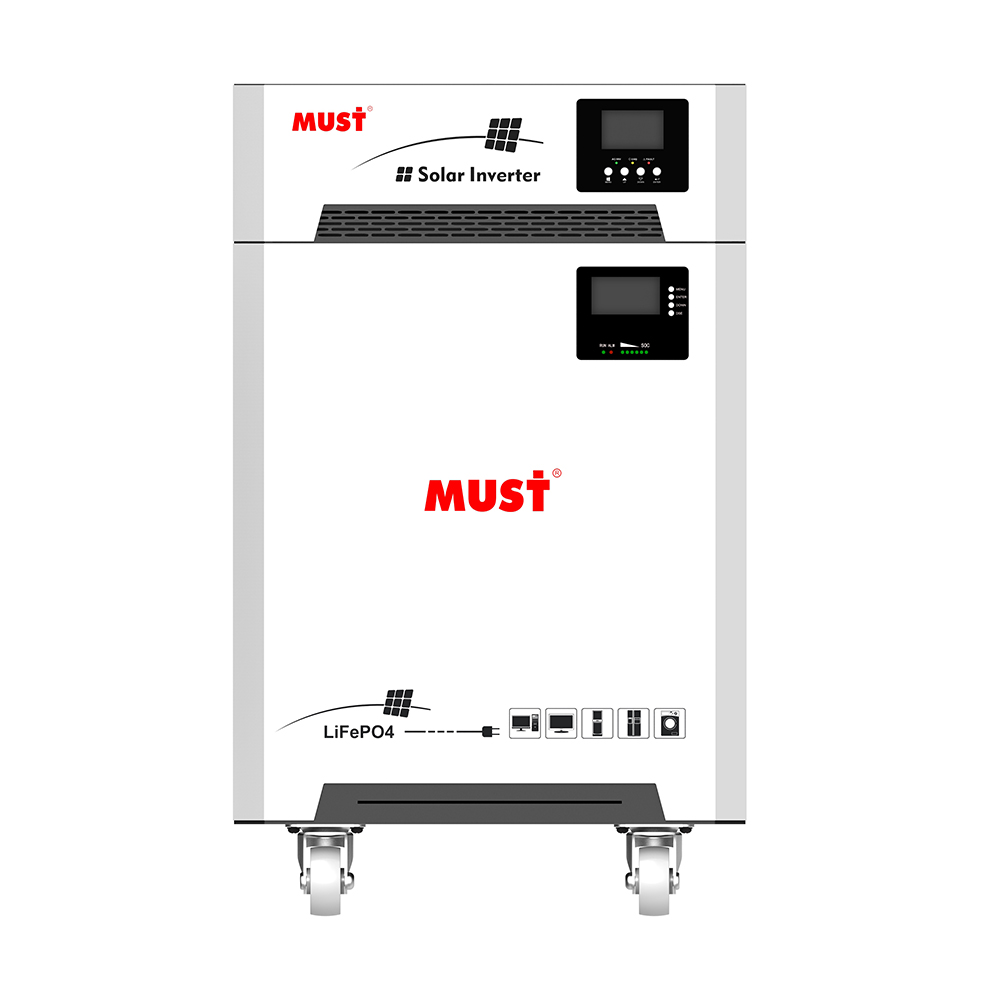
48V 250Ah LiFePO4 Battery & 5KW Hybrid Inverter System
All-in-one scalable home energy storage matrix pairing a high-capacity 250Ah battery bank with a 5kW pure sine wave hybrid inverter for microgrids and heavy backup.
Get a Quote
24V Modular LiFePO4 Battery 100Ah / 200Ah Bank
UN38.3 & CE certified modular storage battery engineered for 5kW to 15kW residential applications, offering stackable plug-and-play installation flexibility.
Get a Quote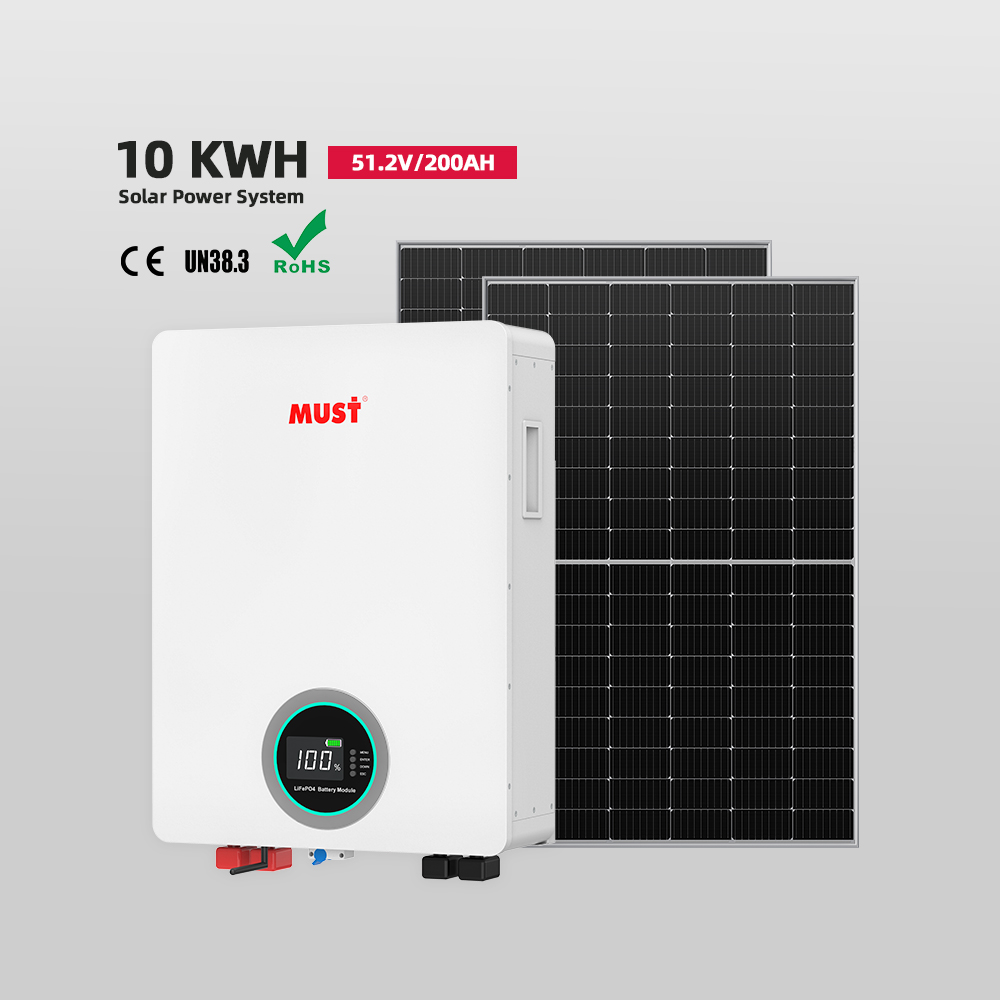
LP16-48100 Telecom & Solar LiFePO4 Battery Module
Commercial grade 48V 100Ah standard rack-mount battery module backed by a 5-year replacement warranty, fully compatible with top-tier grid-tie and hybrid inverters.
Get a Quote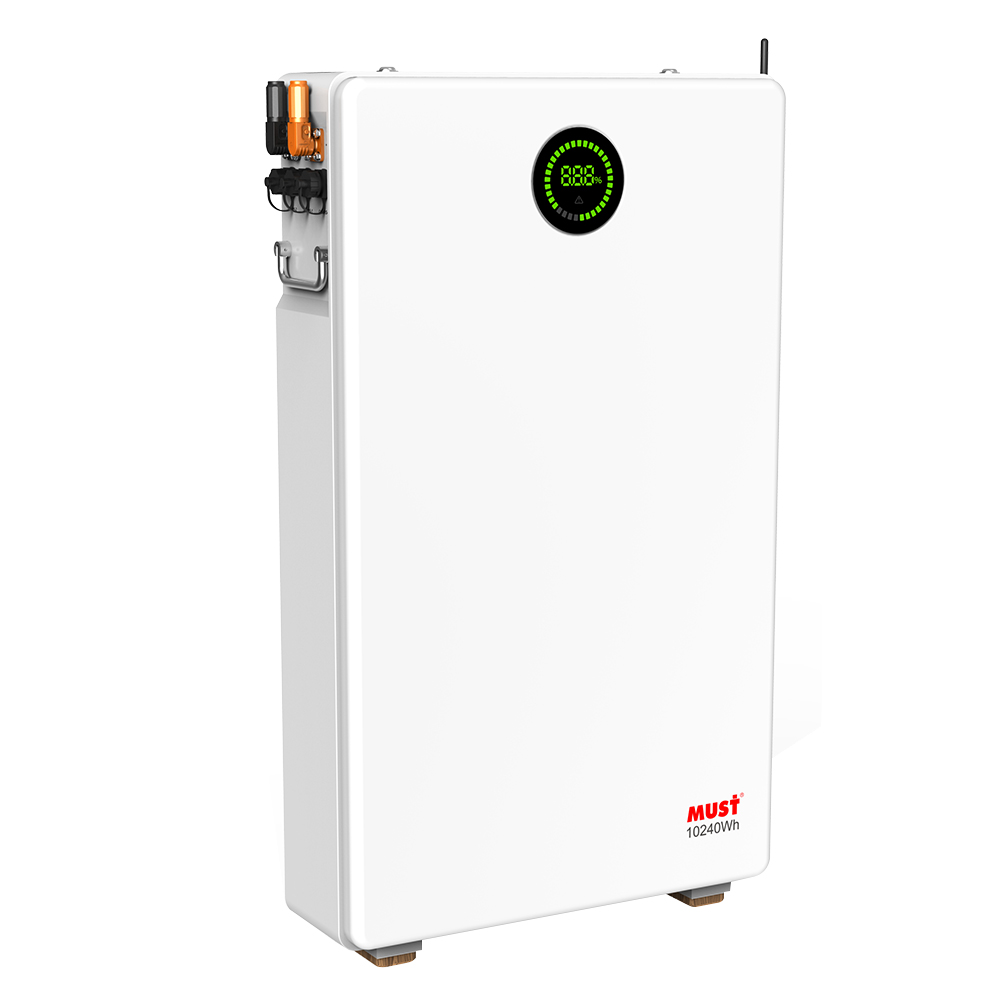
IP65 Wall-Mounted Residential 48V Solar Lithium Pack
Space-saving wall-mounted energy system equipped with built-in Wi-Fi monitoring, CAN/RS485 auto-match protocols, and intelligent thermal management safeguards.
Get a Quote
10kWh 48V 200Ah 3-in-1 Multi-Mount Storage Battery
Versatile 3-in-1 mounting topology supporting wall-mounted, stacked, or rack-mounted configurations, driven by premium LFP chemistry for severe grid instability.
Get a QuoteEnterprise OEM/ODM Infrastructure & Grid-Tie Manufacturing Mastery
As a global authority in power conversion technologies, CJH Energy (Guangdong) Tech Co., Ltd. operates as a tier-1 custom manufacturer specializing in on-grid, off-grid, and hybrid energy storage solutions. Our state-of-the-art 31,056 m² manufacturing complex is equipped with fully automated Surface Mount Technology (SMT) lines, DIP soldering automation, and environmental stress screening (ESS) facilities verified on-site by TÜV Rheinland.
Modern renewable grids require grid-tie solar inverters to function not merely as basic power converters, but as resilient microgrid nodes capable of dynamic voltage stabilization, active frequency regulation, and instant fault ride-through (FRT). By controlling every step of circuit assembly, firmware compiling, and thermal chassis design, CJH Energy provides B2B distributors, EPC contractors, and brand owners with white-label solar hardware that satisfies stringent worldwide utility interconnection requirements.
ISO 9001, 14001, 45001 Ecosystem
Our unified management system guarantees stringent traceability across incoming raw materials, surface-mount components, automated optical inspections (AOI), and final high-temperature burn-in tests under 100% rated capacity.
Custom Firmware & Protocol Matching
Our 80+ engineering staff customize Modbus, CANBUS, and RS485 communication protocols, allowing seamless handshakes between our grid-tie/hybrid inverters and any battery BMS (Pylontech, Victron, SMA, Growatt, Deye).
Global After-Sales & Hub Network
To eliminate international warranty delays, CJH Energy operates regional technical service centers and logistics stocking hubs in Warsaw (Poland), South Africa, Dubai (UAE), and Egypt.
Grid-Tie Inverter Engineering Topology & Information Gain Analysis
Understanding the internal electrical topology of grid-tie power inverters is fundamental for B2B procurement managers who evaluate total cost of ownership (TCO) and levelized cost of energy (LCOE). Standard transformerless grid-tie inverters employ high-frequency H-bridge inverter topologies integrated with wide-bandgap (WBG) Silicon Carbide (SiC) MOSFETs, pushing energy conversion efficiency beyond 98.5% while vastly decreasing magnetic component footprint.
1. Advanced MPPT Tracking Algorithms
Solar arrays suffer from non-linear I-V curves influenced by ambient temperature fluctuations and localized shading. Our grid-tie inverters utilize dynamic perturb-and-observe (P&O) along with incremental conductance maximum power point tracking (MPPT) algorithms, ensuring maximum energy harvesting efficiency exceeding 99.9% dynamic accuracy even under rapid cloud passage scenarios.
2. Anti-Islanding Protection & Grid Code Compliance
Safety during utility grid blackouts is paramount. Our grid-tie inverter platforms integrate dual-layer anti-islanding detection mechanisms—combining active frequency drift (AFD) with passive phase jump detection—meeting rigorous international grid interconnect codes including IEEE 1547, UL 1741, EN 50549-1, and VDE-AR-N 4105.
Topological Matrix: Grid-Tie vs. Hybrid vs. Off-Grid Inverters
| Feature Parameter | Pure Grid-Tie Inverters | On/Off-Grid Hybrid Inverters | Pure Off-Grid Power Inverters |
|---|---|---|---|
| Primary Application | Net-metering, solar utility export | Self-consumption, peak shaving, energy backup | Remote off-grid microgrids, weak grid backup |
| Battery Storage Interface | Not required / Optional high-voltage coupled | Fully integrated (48V Low-voltage or 400V High-voltage) | Mandatory (12V / 24V / 48V DC input) |
| Peak Conversion Efficiency | 98.2% – 98.8% | 95.5% – 97.8% | 90.0% – 94.0% |
| Grid Synchronization Speed | Real-time continuous phase lock | < 10 ms seamless transfer time | N/A (Grid feed disabled or bypass mode) |
| Harmonic Distortion (THD) | < 2% at rated AC load | < 3% at rated AC load | < 3% (Pure Sine Wave transformer) |
| Recommended Sourcing Market | Western Europe, Americas (Stable Utility) | Europe, Latin America, Middle East | Sub-Saharan Africa, South Asia, Remote Mining |
Future Procurement Trends in Solar Grid-Tie & Energy Storage (2025–2030)
Commercial energy buyers, EPC procurement officers, and solar wholesale distributors must align their supply chains with incoming regulatory mandates and technological shifts. Based on global market research and field telemetry, five pivotal trends are defining the future of inverter procurement:
1. Transition to 1000V/1500V High Voltage Architecture
Commercial rooftop and ground-mounted solar installations are migrating from traditional 600V DC inputs to 1000V DC and 1500V DC architectures. Higher system voltage dramatically reduces DC cable copper mass, cuts resistive line losses (I²R), and speeds up overall system installation time.
2. Widespread Adoption of SiC Semiconductors
Silicon Carbide (SiC) MOSFETs are rapidly replacing legacy Silicon IGBT components inside grid-tie inverters. SiC enables higher switching frequencies (over 50 kHz), resulting in smaller inductor cores, negligible heat dissipation, and vastly elevated power density per kilogram.
3. Mandatory AI-Driven AFCI (Arc Fault Protection)
To eliminate fire hazards caused by aging PV cables or loose DC connectors, safety standards in North America and Europe now heavily favor inverters built with Artificial Intelligence Arc Fault Circuit Interrupters (AFCI). These units automatically detect high-frequency arcing noise within 2.5 seconds and shut down high-voltage DC current.
4. Virtual Power Plant (VPP) Cloud Protocols
Grid-tie inverters are evolving into connected edge nodes. Procurement buyers increasingly request built-in MQTT, OpenADR, and SunSpec Modbus protocols that allow utility operators to aggregate thousands of distributed residential inverters into Virtual Power Plants for automated frequency containment reserve (FCR) trading.
5. Battery-Ready Hybrid Modular Flexibility
Pure grid-tie inverters without storage interfaces are seeing declining market share. Distributors are shifting orders toward "Battery-Ready" grid-tie inverters, which include integrated DC-to-DC converter ports, allowing homeowners to attach a LiFePO4 battery pack years after initial solar panel installation without purchasing a new inverter.
B2B Procurement Guide: Selecting the Correct Voltage & Inverter Scale
Sizing power systems incorrectly leads to thermal derating, shortened component lifespans, or excessive balance of system (BOS) costs. Follow our factory engineering guidelines when selecting product SKUs for your target commercial market:
System Voltage Sizing Engineering Rules:
- 12V DC Systems: Suitable strictly for low-power mobile or marine setups with total AC loads under 1,000 Watts. Cable thickness requirements become unmanageable above 100 Amps continuous current.
- 24V DC Systems: Recommended for small residential energy applications ranging between 1,000 W and 3,000 W. Balances cost efficiency with safe electrical currents for light home backup.
- 48V DC Systems: The standard global voltage for residential hybrid solar and battery storage systems operating between 3,000 W and 15,000 W. Operating at 48V (nominal 51.2V LiFePO4) drastically lowers current draw, reduces thermal losses, and allows thin 2AWG/4AWG cabling.
- High Voltage (HV 200V–500V) Systems: Specified for commercial buildings and large residential installations above 15kW to 100kW+, providing maximum efficiency with direct high-voltage DC bus coupling.
Frequently Asked Questions by OEM/ODM Buyers & Wholesalers
Direct technical answers addressing critical sourcing concerns, quality assurances, factory compliance, and custom ordering procedures.
Is CJH Energy a direct manufacturing factory or a trading supplier?
CJH Energy (Guangdong) Tech Co., Ltd. is an established custom manufacturer with proprietary production base covering over 31,056 m² and employing 1,109 skilled personnel. Our facility features advanced automated SMT workshops, transformer winding lines, and dedicated aging test rooms. You are sourcing directly from the manufacturer, fully assessed on-site by TÜV Rheinland.
What level of OEM and ODM customization do you support for grid-tie and hybrid inverters?
We provide full-scope customization options backed by 80+ senior engineers. This includes custom metal/plastic enclosure tooling, silk-screen branding, personalized LCD/LED user interface firmware, custom default operational parameters, unique carton packaging, and customized battery communication protocol flashing (supporting over 30 leading BMS brands via CAN/RS485/Modbus).
Which quality and grid interconnection certifications do your inverters hold?
Our manufacturing complex maintains ISO 9001 quality management, ISO 14001 environmental management, and ISO 45001 occupational safety standards. Product series hold CE, TÜV, IEC 62109-1/-2, IEC 62040, UN38.3, MSDS, and region-specific grid interconnect compliance test reports for Europe, Africa, the Middle East, and the Americas.
What is your annual factory manufacturing capacity and production lead time?
Our annual output exceeds 600,000 power equipment units across inverters, solar charge controllers, UPS systems, and LiFePO4 battery storage units. Standard wholesale orders are typically fulfilled within 15 to 25 calendar days, while customized OEM orders have a streamlined 30-day turnaround from sample approval.
Do you provide overseas warehouse stocking and local technical support?
Yes. To assist our distributor partners with rapid order delivery and hassle-free warranty fulfillment, CJH Energy maintains active subsidiary operations and regional warehouses in Warsaw (Poland), South Africa, Dubai (UAE), and Egypt. Distributors can draw local stock or utilize our local technicians for warranty inspections.
How do your inverters handle severe inductive loads such as air conditioners and water pumps?
Our low-frequency inverter series incorporate heavy copper toroidal transformers capable of sustaining peak surge power up to 300% of their rated nominal capacity for 20 seconds. Our high-frequency grid-tie and hybrid series feature advanced digital DSP overload protection algorithms that prevent voltage collapse during motor startup spikes.
What testing procedures are performed before container shipping?
Every single inverter unit undergoes a rigorous multi-stage quality protocol: Automated Optical Inspection (AOI) of PCBA, high-voltage insulation dielectric testing, dynamic function testing, thermal camera inspection, and a mandatory full-load 45°C burn-in aging test inside controlled environmental chambers before final protective packaging.
How can I request custom technical datasheets, sample units, or factory wholesale price lists?
You can instantly initiate a dialogue with our dedicated international engineering sales team by clicking the Get a Quote button anywhere on this page. We respond within 12 hours with complete technical documentation, OEM MOQ pricing schedules, and sample shipping logistics.
Partner with a Leading Solar Inverter & LiFePO4 OEM Factory
Scale your solar business with factory-direct pricing, custom engineering support, and proven product reliability trusted by distributors across 100+ countries.
