Type to filter product categories, resources and company pages.
A Solar Inverter is more than a box that turns rooftop DC into usable AC. It also influences system monitoring, grid interaction, and how much energy reaches a home or business. NREL power-electronics researcher Dr. David Narang’s work offers a useful principle, paraphrased here: inverter performance involves grid support as well as power conversion. That distinction matters when comparing brands. A high efficiency figure is valuable, but it cannot describe every installation.
This guide examines ten Solar Inverter brands for global buyers. It considers product range, conversion performance, monitoring tools, warranty terms, service access, and compatibility with different system designs. Buyers should also check local installer experience and available technical support. A feature listed on a datasheet may be less useful if nobody nearby can troubleshoot it. Small details matter. So does repair time.
The shortlist is not a universal ranking. A compact home system, a commercial rooftop, and a battery-ready installation can demand different strengths. Climate matters, too: a hot equipment room places different demands on cooling than a shaded, ventilated one. Not every roof is simple. Brand reputation can guide research, but it cannot replace project-specific checks. Some product specifications are difficult to compare directly, and warranty language deserves careful reading. That is an imperfect part of choosing. The aim here is a practical starting point, not a promise that one brand fits every buyer.
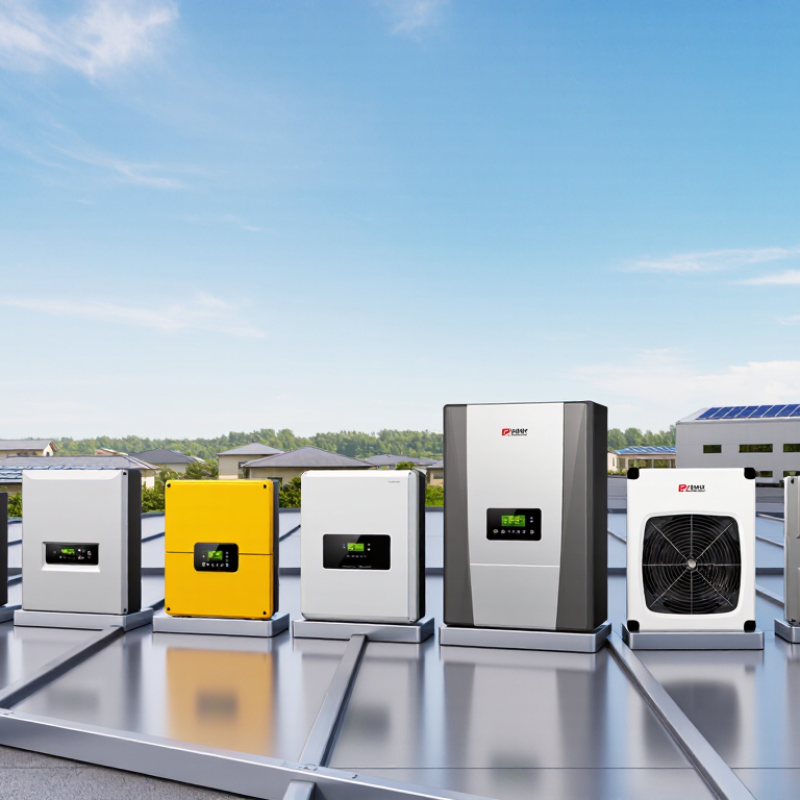
A solar inverter converts the direct current produced by photovoltaic modules into alternating current for household loads or the grid. It also helps manage how efficiently the panels operate. Many inverters use maximum power point tracking to adjust their electrical input as sunlight and module temperature change.
In practice, the inverter’s location and setup matter. A unit mounted in a hot, poorly ventilated space may operate differently from one installed in a shaded, clear area. Grid-connected models typically include monitoring and protective functions, such as stopping power export during a grid outage. Exact requirements depend on the system and applicable technical rules.
Small details matter.
Inverter capacity should match the array and expected use, rather than being chosen by panel wattage alone. Installers also consider string voltage, shading patterns, cable runs, and future expansion. Some systems include battery connections; others are designed only for solar and grid use. Monitoring can reveal a sudden drop in daily output, though an alert does not always identify the cause. A loose connection, dust, or changing weather may all deserve a closer look. The inverter is central, but it cannot compensate for every design flaw.
Comparing inverter brands worldwide takes more than checking headline efficiency. Review independent test results, operating temperature ranges, and performance across different load levels. Numbers need context. A high peak-efficiency figure may not reflect performance during hot afternoons or partial shading. Check compatibility with your panels, battery plans, and local grid requirements. Also examine warranty terms, repair options, and the availability of replacement parts near your project.
Tips: Ask for written test reports and a clear warranty document. Check whether monitoring works reliably with limited internet access. Request service response times for your installation region. Small details matter.
Look closely at installation and long-term operating costs, not just the purchase price. Useful indicators include clear fault alerts, accessible maintenance instructions, and a monitoring system that records production data. Ask how software updates are handled and what information the system collects. These details can be difficult to compare, and a tidy spreadsheet may hide important differences. I would also ask installers about equipment they have serviced through several seasons. Their experience helps, though it cannot predict every site condition. A rooftop near the coast, for example, faces different heat and moisture stresses than a ground-mounted system inland.
Solar inverter portfolios usually span several product lines, each built for a different system size. Residential string inverters suit homes with straightforward roof layouts. Hybrid models add battery connections, while microinverters manage output at individual panels. These options are not interchangeable; shading, roof orientation, and future storage plans all matter.
Commercial ranges often include three-phase string units for warehouses and offices. Larger projects may use central inverters, which combine power from many panel strings. Utility-scale lines can offer higher capacities and grid-support functions. Scale matters. Buyers should compare rated output, operating voltage, efficiency conditions, and protection features—not just headline efficiency.
Monitoring software is another key product line. Portals and apps can show daily generation, system alerts, and fault history, though access and reporting quality vary. Check the details. Compare published warranty terms, service coverage, and compatible battery models before choosing. Installer feedback can reveal practical issues, such as difficult commissioning or slow replacement parts. It is worth admitting that a broad catalogue does not prove every model performs well in every climate; confirm suitability against the project design and local operating conditions.
Global inverter leaders differ in more than rated output. Their choices show up in conversion efficiency, operating range, monitoring tools, and service arrangements. A hybrid model may manage batteries and backup loads, while a string inverter can suit a simpler rooftop system. Small differences matter. Check performance at high temperatures, not just peak efficiency on a cool test bench. Datasheets rarely tell the whole story.
Market focus shapes product design. Some manufacturers prioritize residential rooftops, compact enclosures, and app-based monitoring. Others build larger three-phase units for commercial sites, where service access and grid coordination carry more weight. Grid codes vary by country, so confirm local certification and voltage compatibility with a qualified installer. A product popular in one region may have limited parts availability elsewhere. That is easy to overlook.
Support can separate similar-looking units. Compare warranty terms, response times, local technician coverage, firmware update practices, and replacement-part lead times. Ask who handles a fault: the distributor, installer, or manufacturer. Keep commissioning settings and serial numbers on file. It helps later. Still, published support promises can be hard to compare, and actual service may depend on the local partner. Use rankings as a starting point, not a buying decision. Installation quality and site conditions can change real-world results.
Matching an Inverter Brand to Project Scale and Local Requirements
A suitable inverter depends on the site, not a popularity list. The IEA PVPS report Trends in Photovoltaic Applications 2024 estimates global solar capacity exceeded 1.6 terawatts by the end of 2023. That scale spans shaded home rooftops, warehouses, and utility plants. Each needs different operating features and service support.
For a small roof, check the inverter’s voltage range, MPPT inputs, and monitoring options against the panel layout. A chimney can shade one string; a flexible input design may help, but verify the system plan.
For large projects, compare conversion efficiency, thermal derating, grid-support functions, and replacement procedures. Details matter. Local grid codes and accepted safety certifications also vary, so confirm them with the installer and relevant utility before purchase.
Ask how quickly spare units can reach the project, especially where service teams are distant. Warranty length looks reassuring, but response times can matter more. I would not treat a ranking as proof of reliability; public test conditions rarely match a hot, dusty site or a cold rooftop. Check documented performance and local service history.
It converts the panels’ direct current into alternating current for household use or grid connection. It also adjusts electrical input as sunlight and panel temperatures change.
Heat and poor ventilation can affect operation. A shaded, clear location may offer better conditions. Small details matter.
Match it to the array and expected use, not panel wattage alone. Installers also check string voltage, shading, cable runs, and possible future expansion.
Some models support battery connections; others are designed for solar and grid use only. Check battery compatibility before settling on a system.
It can show daily production, alerts, and fault history. A sudden output drop may point to dust, a loose connection, or changing weather, but the alert may not reveal the cause.
No. Review independent test results, temperature ranges, and performance under different loads. Peak efficiency alone may not reflect a hot afternoon or partial shading.
Read the written warranty, confirm local repair options, and ask about replacement-part availability and service response times. I might overlook these details when comparing prices.
Yes. String models often suit straightforward home roofs, while microinverters manage individual panels. Larger sites may use three-phase string or central inverters. They are not interchangeable.
A Solar Inverter is a key part of a photovoltaic system, converting the electricity produced by solar panels into usable power while helping monitor performance and maintain reliable operation. Choosing one involves more than comparing headline efficiency: buyers should consider output capacity, compatibility with panels and storage, safety features, durability, monitoring tools, warranty terms, and the availability of technical support.
Leading inverter options differ in their designs, product ranges, target markets, and service networks. The right choice depends on the project’s scale and setting, from a small residential installation to a large commercial or utility-scale system. Buyers should also account for local grid requirements, climate, installation conditions, future expansion plans, and access to maintenance. Matching these factors to a product’s capabilities can help create a system that performs reliably and suits both current needs and long-term goals.